Whole-person support
Integrative Care
Your mental health is part of your wider life. Alongside psychiatry and psychological therapy, we consider physical health, nutrition, movement and daily routines, adding support when it has a clear purpose in your care.

Our integrative approach
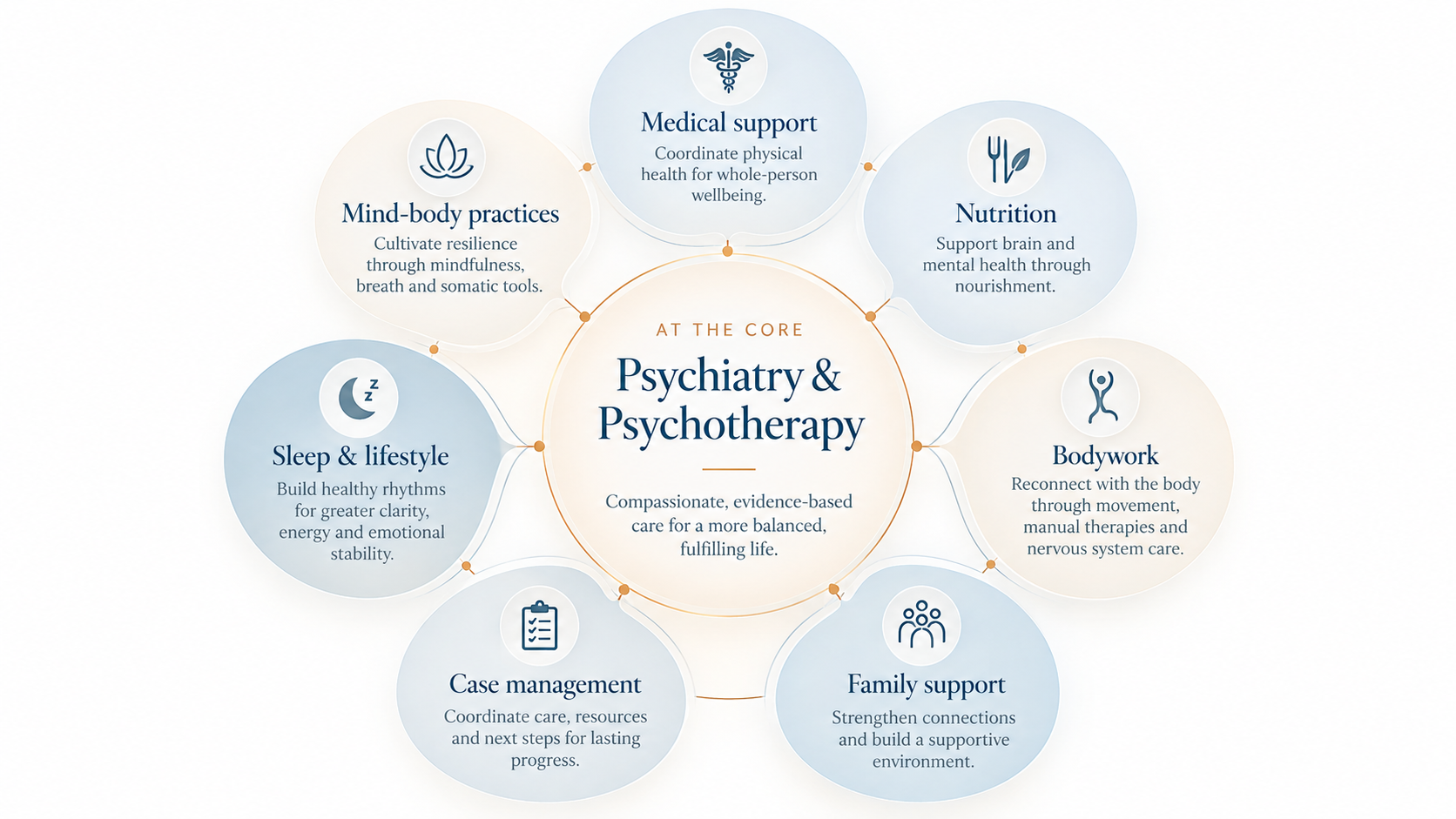
Care begins with you. Psychiatry and psychotherapy form the clinical core, with wider support chosen around your needs.
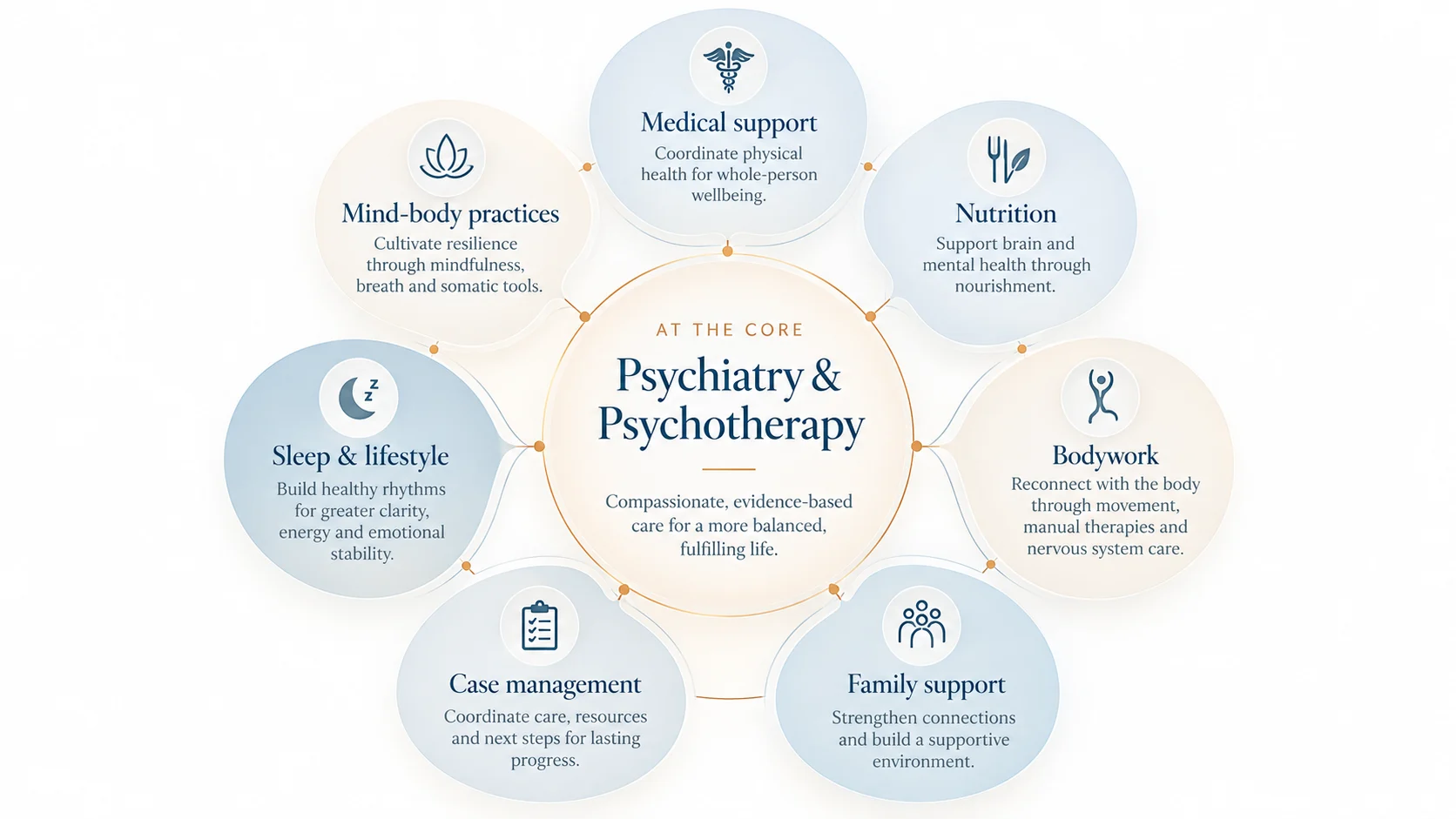
Medical support, nutrition, bodywork, mind-body practices, and sleep and lifestyle support can complement your psychiatric or psychological care. Family support and case management can help connect the people and practical arrangements around you. Your plan is individual: not every person needs every service.
One person, one considered plan
Our integrative approach starts with a clinical assessment rather than a menu of treatments. Mental health is considered in the context of the person: physical health, daily habits, relationships, responsibilities and what matters to them. Supporting care is selected to address an identified need and coordinated with the wider plan.
This does not mean that every person needs every service. It also does not mean replacing established medical or psychological treatment with complementary approaches. We explain what an additional intervention is intended to do, who will provide it, its limitations and how its usefulness will be reviewed.
Medical and physical health
Relevant symptoms, medication, previous investigations and existing medical relationships belong in the assessment. Medical input can help clarify physical-health concerns and coordinate monitoring or referral where indicated. Investigations should have a defined clinical purpose rather than be offered as a routine comprehensive panel for everyone.
Where an external specialist or primary-care professional is best placed to help, that role is made clear. Outpatient care does not replace emergency assessment or hospital services when they are needed.
Nutrition and dietetic care
Nutritional support can explore food routines, preferences and concerns in relation to health and treatment goals. General guidance and specialist clinical dietetics require different expertise. The recommended professional and scope should reflect the need, particularly where eating difficulties or physical-health risks call for coordinated specialist care.
Recommendations should be practical and individualized. Universal supplement packages, unsupported detox claims or promises that nutrition alone will resolve a mental health condition are not the basis of our care model.
Bodywork and movement
Depending on the assessment and available expertise, supporting work may include physiotherapy, movement or a clearly described body-based approach. The practitioner explains the modality, its purpose and relevant boundaries. A broad label such as bodywork should never substitute for knowing what a session involves.
Touch-based care requires consent and the freedom to decline or stop. The approach is adapted to comfort, health and personal preferences. It should not be presented as a cure for trauma or a replacement for indicated clinical treatment.
Sleep, lifestyle and creative support
Sleep patterns, activity, work and recovery time may be useful areas of focus. A realistic plan accounts for your responsibilities rather than prescribing an idealized lifestyle. Medical sleep concerns may require specialist assessment. Creative or mindfulness-based sessions can be considered where they have a clear, appropriate role.
Coordination makes the difference
When several professionals are involved, agreed goals and communication help keep their work connected. The clinical lead remains responsible for clinical decisions within their scope; case management can assist with practical coordination. Your plan is reviewed so additional support remains relevant and proportionate.